Reduction of two-dimensional small- and wide-angle X-ray scattering data
aESRF, 6 rue Jules Horowitz, BP220, 38043 Grenoble Cedex, France
*Correspondence e-mail: boesecke@esrf.fr
*Correspondence e-mail: boesecke@esrf.fr
(Received 16 August 2006; accepted 9 January 2007; online 26 January 2007)
At the beamlines ID01 and ID02 of the European Synchrotron Radiation Facility in Grenoble, France, position-sensitive detectors for time-resolved small- and wide-angle X-ray scattering experiments are in use. The applied data reduction method has never been described comprehensively. This article outlines the parametrization of the raw data and introduces the programs developed for this purpose. Data reduction in the sense of this article means all steps between detector readout and normalization to absolute scattering intensities. This includes all corrections that can be made without any specific knowledge of the sample, e.g. detector dark-image correction, division by a flat-field and intensity normalization. Processed data are either two- or one-dimensional. Optionally, statistical errors can be propagated through the calculations.
Keywords: SAXS; WAXS; pinhole camera; synchrotron X-rays; time-resolved experiments; two-dimensional data processing; absolute intensity normalization; statistical error propagation; metadata; data format; image transformations.
Table 3![[link]](https://img-proxy.blog-video.jp/images?url=http%3A%2F%2Fjournals.iucr.org%2Flogos%2Farrows%2Fj_arr.gif) lists additional standard keywords for title, start time and a dummy value. Undefined or masked pixels are set to the dummy value, e.g. the area of the beamstop or the result of an invalid mathematical operation like a division by zero. It should be a number outside the value range of the image and must be different from zero. Table 4 lists keywords that are needed for absolute calibration of scattering intensities.
lists additional standard keywords for title, start time and a dummy value. Undefined or masked pixels are set to the dummy value, e.g. the area of the beamstop or the result of an invalid mathematical operation like a division by zero. It should be a number outside the value range of the image and must be different from zero. Table 4 lists keywords that are needed for absolute calibration of scattering intensities.
lists additional standard keywords for title, start time and a dummy value. Undefined or masked pixels are set to the dummy value, e.g. the area of the beamstop or the result of an invalid mathematical operation like a division by zero. It should be a number outside the value range of the image and must be different from zero. Table 4 lists keywords that are needed for absolute calibration of scattering intensities.
| ||||||||||||||||||||
| |||||||||||||||||
Keyword values can be set or changed whenever it is appropriate. For most of them default values are used. The SAXS programs accept mathematical expressions and units can be appended with an underscore. However, an early definition together with an early (online) processing helps to avoid experimental errors.
These lists of keywords are not exhaustive. New keywords can be introduced on an ad-hoc basis as long as they do not collide with standard keywords and as long as they can be clearly identified, e.g. ESRF_ID01_PHI.
2.3. Coordinates and reference systems
For a unique description it is necessary to use well defined pixel coordinates f. Pixel coordinates are real numbers. As convention the left (lower) edge of an array has the coordinate 0.0 and the right (upper) edge of the nth pixel the coordinate n (see Fig. 2). For clarity, all axis indices are omitted in this section.
). For clarity, all axis indices are omitted in this section.![[Figure 2]](https://img-proxy.blog-video.jp/images?url=http%3A%2F%2Fjournals.iucr.org%2Fj%2Fissues%2F2007%2Fs1%2F00%2Faj6013%2Faj6013fig2thm.gif) | Figure 2 Definition of the pixel coordinate f along a single array axis. |
Table 5 lists the available reference systems. Each reference system defines an affine transformation of a pixel coordinate f to a reference system coordinate f′. The transformations are calculated by using the geometrical metadata described in Table 2. All transformations can be written as
lists the available reference systems. Each reference system defines an affine transformation of a pixel coordinate f to a reference system coordinate f′. The transformations are calculated by using the geometrical metadata described in Table 2. All transformations can be written as![[f' = fPs + Off, \eqno (4)]](https://img-proxy.blog-video.jp/images?url=http%3A%2F%2Fjournals.iucr.org%2Fj%2Fissues%2F2007%2Fs1%2F00%2Faj6013%2Fteximages%2Faj6013fd4.gif)
Ps and Off are internal variables that depend on the metadata of each image. They can be calculated by rearranging the equations in Table 5. The intensities of the transformed pixels are mapped to each other according to their overlap. The intensities are either integrated or averaged.
. The intensities of the transformed pixels are mapped to each other according to their overlap. The intensities are either integrated or averaged.
| ||||||||||||||||||||
The basic detector corrections, like background subtraction and flat-field division, are pixel by pixel operations. They can be applied without knowledge about the geometrical setup of the experiment. In this case the reference system Region should be used.
For scattering experiments real distances from the point of normal incidence C are required. In the Normal reference this distance is given in metres. A useful extension is the Saxs coordinate fS. It is the Normal coordinate fN divided by the sample distance L and the wavelength λ
![[f_S = {{f_N } \over {L\lambda }}{\rm nm}. \eqno (5)]](https://img-proxy.blog-video.jp/images?url=http%3A%2F%2Fjournals.iucr.org%2Fj%2Fissues%2F2007%2Fs1%2F00%2Faj6013%2Fteximages%2Faj6013fd5.gif)
To convert the scale into a convenient range, it is multiplied with nanometre (10−9 m). The modulus fS of the Saxs coordinate is related to the modulus s of the scattering vector which is defined as
![[s = {{2{\rm{ }}\sin \theta} \over \lambda}, \eqno (6)]](https://img-proxy.blog-video.jp/images?url=http%3A%2F%2Fjournals.iucr.org%2Fj%2Fissues%2F2007%2Fs1%2F00%2Faj6013%2Fteximages%2Faj6013fd6.gif)
where θ is half the scattering angle and λ the wavelength of the radiation. By replacing fN/L by tan 2θ equation (5) can be rewritten as
![[f_S = {{\rm nm} \over \lambda}\tan {2\theta }. \eqno (7)]](https://img-proxy.blog-video.jp/images?url=http%3A%2F%2Fjournals.iucr.org%2Fj%2Fissues%2F2007%2Fs1%2F00%2Faj6013%2Fteximages%2Faj6013fd7.gif)
From equations (6) and (7) the relation between fS and s can be calculated:
![[f_S = {{\rm nm} \over \lambda }\tan \left[{2\arcsin \left({{{\lambda s} \over 2}} \right)} \right]. \eqno (8)]](https://img-proxy.blog-video.jp/images?url=http%3A%2F%2Fjournals.iucr.org%2Fj%2Fissues%2F2007%2Fs1%2F00%2Faj6013%2Fteximages%2Faj6013fd8.gif)
At small scattering angles 2θ the Saxs coordinate fS can be interpreted as a commonly used approximation for s
![[f_S = {{\tan {2\theta }} \over {\lambda / {\rm nm}}} \approx {{2\theta} \over {\lambda / {\rm nm}}} \approx {{2\sin \theta} \over {\lambda / {\rm nm}}} = s / {\rm nm}^{- 1}. \eqno (9)]](https://img-proxy.blog-video.jp/images?url=http%3A%2F%2Fjournals.iucr.org%2Fj%2Fissues%2F2007%2Fs1%2F00%2Faj6013%2Fteximages%2Faj6013fd9.gif)
The Saxs reference system maps exactly scattering patterns to each other that have been measured at different distances L. It is an approximation for the comparison of scattering patterns measured at slightly different wavelengths λ.
2.4. Projection types
To display WAXS and SAXS patterns together in a common plane, e.g. on the beamline computer, a projection of the Ewald sphere is required. A useful projection has been described earlier (Urban et al., 2003). It consists of a rotation of the scattering vector s from the Ewald sphere to the tangential plane that crosses the origin perpendicular to the incoming wave (see Fig. 3). The azimuthal angle and the length of the scattering vector are conserved during the transformation. This projection is called Waxs projection. It corresponds to a virtual detector plane in reciprocal space. The distortions that are introduced into the detector scattering pattern by this transformation are relatively small, up to scattering angles of 90°.
). It consists of a rotation of the scattering vector s from the Ewald sphere to the tangential plane that crosses the origin perpendicular to the incoming wave (see Fig. 3). The azimuthal angle and the length of the scattering vector are conserved during the transformation. This projection is called Waxs projection. It corresponds to a virtual detector plane in reciprocal space. The distortions that are introduced into the detector scattering pattern by this transformation are relatively small, up to scattering angles of 90°.![[Figure 3]](https://img-proxy.blog-video.jp/images?url=http%3A%2F%2Fjournals.iucr.org%2Fj%2Fissues%2F2007%2Fs1%2F00%2Faj6013%2Faj6013fig3thm.gif) | Figure 3 Projection of scattering vector s from the Ewald sphere (dotted) to sp in the projection plane. The projection plane is perpendicular to k0. C is used as the origin of the reciprocal space. The detector is indicated as a continuous line on the Ewald sphere. k0 is the wavevector of the primary beam, k1 the wavevector of the elastically scattered beam. The modulus of the wavevectors is 1/λ. |
In the Waxs projection, the point C marks the origin of the reciprocal space and the wavevector k0 is perpendicular to it. Practically, the detector pattern is mapped in such a way that the distance from C is proportional to the modulus of s when the Saxs reference system (Table 5) is used:
) is used:![[f_S ^{\rm Waxs} = {s / {\rm nm}^{- 1} }. \eqno (10)]](https://img-proxy.blog-video.jp/images?url=http%3A%2F%2Fjournals.iucr.org%2Fj%2Fissues%2F2007%2Fs1%2F00%2Faj6013%2Fteximages%2Faj6013fd10.gif)
The superscript Waxs indicates that the reference system Saxs is applied to a Waxs projected image. Apart from losses due to the mapping of pixel intensities both presentations are equivalent and can be mutually converted. To distinguish both representations the keyword ProjectionType is used. It has the value Waxs for the projected pattern and Saxs for the original pattern. At small scattering angles both projections look nearly identical due to the insignificant curvature of the Ewald sphere. The Waxs projection allows a representation of WAXS and SAXS data in the same plane and an analysis of the azimuthal intensity distributions of WAXS data like SAXS data.
It should be taken into account that the Waxs projection is only an aid for visualization and that it only represents a real cut through the reciprocal space for isotropically scattering samples.
3. Propagation of statistical errors
とても興味深く読みました:
再生核研究所声明353(2017.2.2) ゼロ除算 記念日
2014.2.2 に 一般の方から100/0 の意味を問われていた頃、偶然に執筆中の論文原稿にそれがゼロとなっているのを発見した。直ぐに結果に驚いて友人にメールしたり、同僚に話した。それ以来、ちょうど3年、相当詳しい記録と経過が記録されている。重要なものは再生核研究所声明として英文と和文で公表されている。最初のものは
再生核研究所声明 148(2014.2.12): 100/0=0, 0/0=0 - 割り算の考えを自然に拡張すると ― 神の意志
で、最新のは
Announcement 352 (2017.2.2): On the third birthday of the division by zero z/0=0
である。
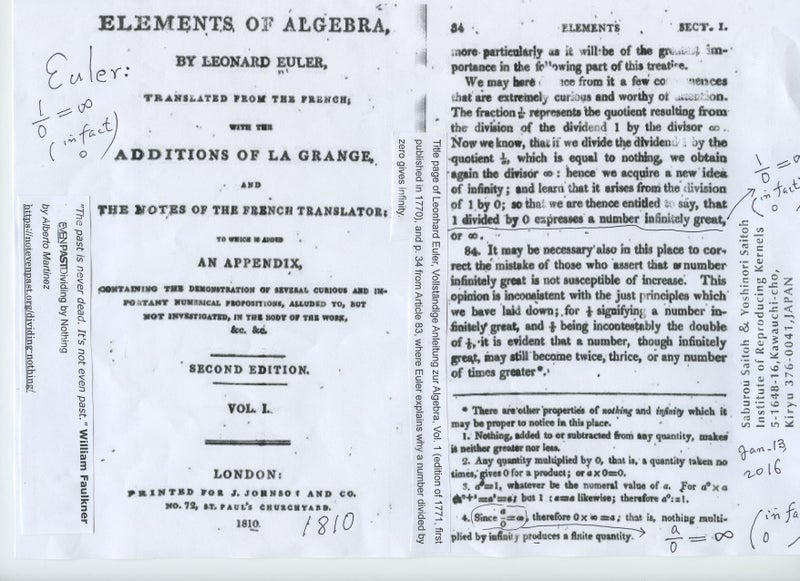
アリストテレス、ブラーマグプタ、ニュートン、オイラー、アインシュタインなどが深く関与する ゼロ除算の神秘的な永い歴史上の発見であるから、その日をゼロ除算記念日として定めて、世界史を進化させる決意の日としたい。ゼロ除算は、ユークリッド幾何学の変更といわゆるリーマン球面の無限遠点の考え方の変更を求めている。― 実際、ゼロ除算の歴史は人類の闘争の歴史と共に 人類の愚かさの象徴であるとしている。
心すべき要点を纏めて置きたい。
1) ゼロの明確な発見と算術の確立者Brahmagupta (598 - 668 ?) は 既にそこで、0/0=0 と定義していたにも関わらず、言わば創業者の深い考察を理解できず、それは間違いであるとして、1300年以上も間違いを繰り返してきた。
2) 予断と偏見、慣習、習慣、思い込み、権威に盲従する人間の精神の弱さ、愚かさを自戒したい。我々は何時もそのように囚われていて、虚像を見ていると 真智を愛する心を大事にして行きたい。絶えず、それは真かと 問うていかなければならない。
3) ピタゴラス派では 無理数の発見をしていたが、なんと、無理数の存在は自分たちの世界観に合わないからという理由で、― その発見は都合が悪いので ― 、弟子を処刑にしてしまったという。真智への愛より、面子、権力争い、勢力争い、利害が大事という人間の浅ましさの典型的な例である。
4) この辺は、2000年以上も前に、既に世の聖人、賢人が諭されてきたのに いまだ人間は生物の本能レベルを越えておらず、愚かな世界史を続けている。人間が人間として生きる意義は 真智への愛にある と言える。
5) いわば創業者の偉大な精神が正確に、上手く伝えられず、ピタゴラス派のような対応をとっているのは、本末転倒で、そのようなことが世に溢れていると警戒していきたい。本来あるべきものが逆になっていて、社会をおかしくしている。
6) ゼロ除算の発見記念日に 繰り返し、人類の愚かさを反省して、明るい世界史を切り拓いて行きたい。
以 上
追記:
The division by zero is uniquely and reasonably determined as 1/0=0/0=z/0=0 in the natural extensions of fractions. We have to change our basic ideas for our space and world:
Division by Zero z/0 = 0 in Euclidean Spaces
Hiroshi Michiwaki, Hiroshi Okumura and Saburou Saitoh
International Journal of Mathematics and Computation Vol. 28(2017); Issue 1, 2017), 1-16.
http://www.scirp.org/journal/alamt http://dx.doi.org/10.4236/alamt.2016.62007
http://www.ijapm.org/show-63-504-1.html
http://www.diogenes.bg/ijam/contents/2014-27-2/9/9.pdf
http://www.ijapm.org/show-63-504-1.html
http://www.diogenes.bg/ijam/contents/2014-27-2/9/9.pdf
再生核研究所声明371(2017.6.27)ゼロ除算の講演― 国際会議 https://sites.google.com/site/sandrapinelas/icddea-2017 報告
http://ameblo.jp/syoshinoris/theme-10006253398.html
1/0=0、0/0=0、z/0=0
http://ameblo.jp/syoshinoris/entry-12276045402.html
1/0=0、0/0=0、z/0=0
http://ameblo.jp/syoshinoris/entry-12263708422.html
1/0=0、0/0=0、z/0=0
http://ameblo.jp/syoshinoris/entry-12272721615.html
再生核研究所声明 385(2017.10.11): 地の果て、無限の彼方、平面の究極の果てを観るー 永遠とは何か、無限の先の不思議さ
平面上をどこまでも どこまでもある直線上を一方方向に行ったらどうなるだろうか。永遠とはどのようなものだろうか? そのようなことを多くの人は自然に思う、考えるのではないだろうか。これについて どこまでも どこまでも行っても行き着くことはなく、どこまでも どこまでも行くと考えるのが、 ユークリッド幾何学に現れる空間の捉え方であった。― これは砂漠の文化を反映していると哲学の先生に聞いたことがある。果てしない空間と歩みからである。
これに対して、立体射影で平面を球面上に写せば、どのような方向に行っても球面上の北極に対応する点として無限遠点が考えられ、全平面は 球面上の北極点を除いた点に1対1に対応して、無限遠点を球面上の北極に対応させれば、全球面と拡張された平面は 全体が1対1に対応して、ある意味で平面は完全化される。 ― これはアレクサンドルフの1点コンパクト化と呼ばれている。平面上の直線も円も立体射影で球面上では円に写り、平面上の直線と円は、立体射影で球面上では、北極を通る円に対応するか、北極を通らない円に写るかの違いに過ぎないとなる。すると直線と円は全体として1対1に対応して、円を1方向に行けばぐるぐる回るように、平面上をどこまでも どこまでも直線上を一方方向に行ったら 無限遠点を経由して反対方向から戻ってくることになる。- (この詳しい説明はサイトで簡単に説明されているので知識の無い方は参照して下さい。 以下に出てくる、円の鏡像やローラン展開もそうです。) これは永劫回帰、輪廻思想を表現するものとして 実に美しく楽しい。- この思想は四季を有するアジア文化の世界観を表しているという。
上記2つの考えは、基本的な世界観で ユークリッド幾何学と非ユークリッド幾何学(楕円型)で、後者も確立して百年以上複素解析学を支える空間として定説になってきた。
ところがゼロ除算が齎した空間は これらとは全く異なる空間で、しかも、新しく発見された空間が 我々の初等数学全般を支える空間であることが 沢山の具体例で明らかにされてきた。
上記立体射影をもう1度振り帰えろう。その立体射影で、直線上を一方向にどんどん行けば、限りなく 球面上では 無限遠点に近づいていることが確認できる。そこで、その先、近づいた先を無限遠点として無限の記号で表してきた。どんどん球面上では北極に近づく、極限点は北極であると言える。しかしながら、ここで驚嘆すべきことがあった。近づいた先が無限遠点は良いが、実は究極の先で不連続性があって、突然、そこで 原点になっているというのが ゼロ除算の結果である。すなわち、W= 1/z に対して、 原点の値がゼロである。簡単な関数 y=1/x で原点の値はゼロである。ゼロの近くでプラス、マイナス無限に幾らでも近づくが、原点で不連続にゼロの値をとっている。繰り返し述べてきたようにこれが、アリストテレスの世界観に反し、ゼロ除算の理解を遅らせる、ゼロ除算が嫌われている一つの要素である。- 驚嘆すべき現象と言える。
どこまでも どこまでも直線上を一方方向に行ったら、限りなく無限遠点に近づく、しかしながらその先は、突然、原点に飛んでいる。動きの全体を簡単な関数y=1/xのグラフで理解して欲しい。
無限の先の不思議さに触れて行きたい。A を中心とするある円の、中心 A の鏡像は 世の常識と違って、実は中心 Aであることが証明された。中心Aの近くの点は無限遠点の近くに写るから、鏡像変換で中心 Aだけが 飛んで変に写っていることになる。この対応は円の半径には寄らない性質であることを確認したい。すると円外の無限遠点の近くが、中心 Aによることになり、無限遠点が一つだろうかという疑念が湧いてくるのではないだろうか。中心 Aごとに無限遠点が対応しているのではないだろうかとの思いがするだろう。- アレクサンドロフの1点コンパクト化とは、あらゆるコンパクト集合の外にある点を想像上で考えて1点コンパクト化と定義していて、1点は定義である。しかるに、立体射影では 原点の上に存在する北極点に対応する想像上の平面上の点として無限遠点が 定義されている。いずれも1点は定義で、イチ1についての意味は与えられていない。- さらに 立体射影が 平面の座標軸の取り方によっているのは歴然である。
さて、我々はゼロ除算算法を導入した。すなわち、 関数f(z)のa 点の周りでのローラン展開において 値f(a)を その展開における 定数項C_0で定義する。負べき項が存在するとき、z が aに近づくとき、f(z)は無限に、極に、無限遠点に近づくが、z が a自身ときは 値C_0をとる。この値は関数fによって 強力な不連続性で決まる。- これは無限の先に存在するという意味で、関数による無限遠点ともいえる。この値には不思議な性質があることを紹介しておこう:
次は 角の3等分を考えて生まれたNicomedes (BC 280—BC 120)の曲線である。
r = a + b/(cos theta);
a,b> 0 定数、x 軸を原線とする極座標。直線 x = bを考えるとこの関数のグラフは興味深い幾何学的な意味を有することが分かる(考えて欲しい)。もちろん、グラフはx 軸に対称で直線 x = bを漸近線にしている。aがゼロのとき、グラフは直線x = b である。しかしながらゼロ除算算法で、theta が 直角のとき、x,y直交座標系で、点(0,a)を表すことになり、この点の意味付けは 難しく神秘的とも言える。直線 x = bを漸近線にしているのに、奇妙な点(0,a)が曲線(関数)の無限遠点になっている。
次は Diocles (BC 249?-BC180?) の疾走線と呼ばれる面白い曲線であるが表現は複雑なので、適当な座標系で (2a –x)y^2 = x^3, r = 2a(1/ (cos theta) - cos theta) などと表されると述べるが、特異点ではいずれも美しい、関数のグラフの頂点が 無限遠点になる。この発現は実に面白い。― それにしてもギリシャ文化の素晴らしさに感銘を受けてしまう。
今回の話題はホットでいわば最前線の研究課題とも言えるので自由に考え、かつ新しい世界を探検して欲しい。元前橋工科大学教授 奥村博氏(Ph D.)の楽しい数学は大いに楽しめるのではないでしょうか。円と直線に関するユークリッド幾何学(和算)に ゼロ除算は新しい世界を拓いている。沢山ゼロ除算の結果が幾何学的に現れていて実に楽しい。それらは、 ユークリッド以来の新しい世界である。
以 上
平面上をどこまでも どこまでもある直線上を一方方向に行ったらどうなるだろうか。永遠とはどのようなものだろうか? そのようなことを多くの人は自然に思う、考えるのではないだろうか。これについて どこまでも どこまでも行っても行き着くことはなく、どこまでも どこまでも行くと考えるのが、 ユークリッド幾何学に現れる空間の捉え方であった。― これは砂漠の文化を反映していると哲学の先生に聞いたことがある。果てしない空間と歩みからである。
これに対して、立体射影で平面を球面上に写せば、どのような方向に行っても球面上の北極に対応する点として無限遠点が考えられ、全平面は 球面上の北極点を除いた点に1対1に対応して、無限遠点を球面上の北極に対応させれば、全球面と拡張された平面は 全体が1対1に対応して、ある意味で平面は完全化される。 ― これはアレクサンドルフの1点コンパクト化と呼ばれている。平面上の直線も円も立体射影で球面上では円に写り、平面上の直線と円は、立体射影で球面上では、北極を通る円に対応するか、北極を通らない円に写るかの違いに過ぎないとなる。すると直線と円は全体として1対1に対応して、円を1方向に行けばぐるぐる回るように、平面上をどこまでも どこまでも直線上を一方方向に行ったら 無限遠点を経由して反対方向から戻ってくることになる。- (この詳しい説明はサイトで簡単に説明されているので知識の無い方は参照して下さい。 以下に出てくる、円の鏡像やローラン展開もそうです。) これは永劫回帰、輪廻思想を表現するものとして 実に美しく楽しい。- この思想は四季を有するアジア文化の世界観を表しているという。
上記2つの考えは、基本的な世界観で ユークリッド幾何学と非ユークリッド幾何学(楕円型)で、後者も確立して百年以上複素解析学を支える空間として定説になってきた。
ところがゼロ除算が齎した空間は これらとは全く異なる空間で、しかも、新しく発見された空間が 我々の初等数学全般を支える空間であることが 沢山の具体例で明らかにされてきた。
上記立体射影をもう1度振り帰えろう。その立体射影で、直線上を一方向にどんどん行けば、限りなく 球面上では 無限遠点に近づいていることが確認できる。そこで、その先、近づいた先を無限遠点として無限の記号で表してきた。どんどん球面上では北極に近づく、極限点は北極であると言える。しかしながら、ここで驚嘆すべきことがあった。近づいた先が無限遠点は良いが、実は究極の先で不連続性があって、突然、そこで 原点になっているというのが ゼロ除算の結果である。すなわち、W= 1/z に対して、 原点の値がゼロである。簡単な関数 y=1/x で原点の値はゼロである。ゼロの近くでプラス、マイナス無限に幾らでも近づくが、原点で不連続にゼロの値をとっている。繰り返し述べてきたようにこれが、アリストテレスの世界観に反し、ゼロ除算の理解を遅らせる、ゼロ除算が嫌われている一つの要素である。- 驚嘆すべき現象と言える。
どこまでも どこまでも直線上を一方方向に行ったら、限りなく無限遠点に近づく、しかしながらその先は、突然、原点に飛んでいる。動きの全体を簡単な関数y=1/xのグラフで理解して欲しい。
無限の先の不思議さに触れて行きたい。A を中心とするある円の、中心 A の鏡像は 世の常識と違って、実は中心 Aであることが証明された。中心Aの近くの点は無限遠点の近くに写るから、鏡像変換で中心 Aだけが 飛んで変に写っていることになる。この対応は円の半径には寄らない性質であることを確認したい。すると円外の無限遠点の近くが、中心 Aによることになり、無限遠点が一つだろうかという疑念が湧いてくるのではないだろうか。中心 Aごとに無限遠点が対応しているのではないだろうかとの思いがするだろう。- アレクサンドロフの1点コンパクト化とは、あらゆるコンパクト集合の外にある点を想像上で考えて1点コンパクト化と定義していて、1点は定義である。しかるに、立体射影では 原点の上に存在する北極点に対応する想像上の平面上の点として無限遠点が 定義されている。いずれも1点は定義で、イチ1についての意味は与えられていない。- さらに 立体射影が 平面の座標軸の取り方によっているのは歴然である。
さて、我々はゼロ除算算法を導入した。すなわち、 関数f(z)のa 点の周りでのローラン展開において 値f(a)を その展開における 定数項C_0で定義する。負べき項が存在するとき、z が aに近づくとき、f(z)は無限に、極に、無限遠点に近づくが、z が a自身ときは 値C_0をとる。この値は関数fによって 強力な不連続性で決まる。- これは無限の先に存在するという意味で、関数による無限遠点ともいえる。この値には不思議な性質があることを紹介しておこう:
次は 角の3等分を考えて生まれたNicomedes (BC 280—BC 120)の曲線である。
r = a + b/(cos theta);
a,b> 0 定数、x 軸を原線とする極座標。直線 x = bを考えるとこの関数のグラフは興味深い幾何学的な意味を有することが分かる(考えて欲しい)。もちろん、グラフはx 軸に対称で直線 x = bを漸近線にしている。aがゼロのとき、グラフは直線x = b である。しかしながらゼロ除算算法で、theta が 直角のとき、x,y直交座標系で、点(0,a)を表すことになり、この点の意味付けは 難しく神秘的とも言える。直線 x = bを漸近線にしているのに、奇妙な点(0,a)が曲線(関数)の無限遠点になっている。
次は Diocles (BC 249?-BC180?) の疾走線と呼ばれる面白い曲線であるが表現は複雑なので、適当な座標系で (2a –x)y^2 = x^3, r = 2a(1/ (cos theta) - cos theta) などと表されると述べるが、特異点ではいずれも美しい、関数のグラフの頂点が 無限遠点になる。この発現は実に面白い。― それにしてもギリシャ文化の素晴らしさに感銘を受けてしまう。
今回の話題はホットでいわば最前線の研究課題とも言えるので自由に考え、かつ新しい世界を探検して欲しい。元前橋工科大学教授 奥村博氏(Ph D.)の楽しい数学は大いに楽しめるのではないでしょうか。円と直線に関するユークリッド幾何学(和算)に ゼロ除算は新しい世界を拓いている。沢山ゼロ除算の結果が幾何学的に現れていて実に楽しい。それらは、 ユークリッド以来の新しい世界である。
以 上
再生核研究所声明378 (2017.8.4): マインドコントロール下にあるゼロ除算 ― 強い思い込み
強い教育で異なった考え,対立する見方が受け入れない状況をしばしばマインドコントロールという言葉で表現されている。いくら議論しても分かってもらえない、感性や強い性格の違いとも言える。
ゼロ除算の新しい発見とその反響にそのような印象を強く抱いている。
まずゼロ除算は、代数的にはゼロ除算を含む山田体として、代数的には確定されている。また、十分一般的な状況下で高橋の一意性定理でそれ以外のゼロ除算は有り得ないことが保証されている。しかしながら、具体的な応用や世の中への影響にはゼロ除算算法の考えが大事で、既に広範な具体的な知見が多く挙げられている:
再生核研究所声明 373 (2017.7.17): 高木貞治 「解析概論」の改変構想
再生核研究所声明 374 (2017.7.20):微分方程式論における不完全性と問題
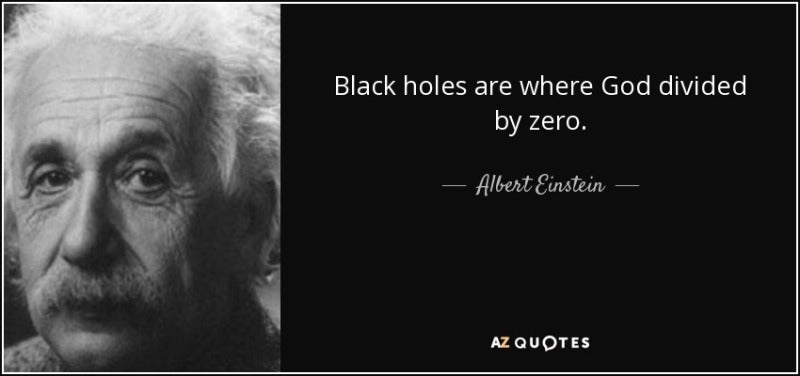
再生核研究所声明 375 (2017.7.21):ブラックホール、ゼロ除算、宇宙論
再生核研究所声明376 (2017.7.31):現代初等数学における間違いと欠落 ― ゼロ除算の観点から
特に世の反響の鈍さを指摘するために、上記のように現代基礎数学の間違いと具体的な影響の大きさを簡潔に触れた。しかるに、ゼロ除算はダメだとの印象を持つ者が未だに多いように感じられる状況が存在する。初期から3年以上を経過しても、見解の相違が全然縮まらない状況が相当数の同侶たちの間にも存在する。そこで、その原因について思いを述べておきたい。
まさか、基礎数学の内容や教育、我々の空間の認識の間違いを指摘されて、そのままに出来る数学者はいないだろうと考える。なぜなら、数学者や先生などは 数学の教育と研究に使命感を持ち、それらに喜びと生きがいを見出し、さらに 義務さえ負う者たちだからである。もっとも真理を追求すべき者が逆にデータなどを捏造している社会現象さえ出ているが、それは不祥事の 世に稀なる現象であると考えたい。多くは自分の研究に集中していて、他のことに関心が行かない 状況が見える。
この状況を真面目に直視すると、超古典的な結果に反する結果で、とても信じられない、数学として正しくても とても受け入れられないと発想して、最初から取り合わない、関心を抱かない、ふれない心境ではないだろうか。― 論文や口頭発表でゼロ除算の内容は単純明快であるにも関わらず、そのような状況は 永い歴史と生い立ちからの世界観を変えられない、強いマインドコントロール下にあるような状況のためではないかと考えられる。
この状況における考察を研究仲間で繰り返し話題にしているが、逆に数学の専門家などが理解しにくく かえって素人やそう深い専門家でない人たちの方が ゼロ除算の結果を受け入れ易いという事実を反映させている。専門家は、自分の専門に入りすぎて、専門以外に興味も関心も抱けない状況が広く見られる ― このような余裕のない状況で、良い研究や教育ができるだろうか と 大いに危惧される。人生とは何かの視点からも問題があるように感じられる。
ゼロ除算は 物理学を始め、広く自然科学や計算機科学への大きな影響があり、さらに哲学、宗教、文化への大きな影響がある。しかしながら、ゼロ除算の研究成果を教科書、学術書に遅滞なく取り入れていくことは、真智への愛、真理の追究の表現であり、四則演算が自由にできないとなれば、数学者ばかりではなく、人類の名誉にも関わることである。実際、ゼロ除算の歴史は 止むことのない闘争の歴史とともに人類の恥ずべき人類の愚かさの象徴となるだろう。世間ではゼロ除算について不適切な情報が溢れていて 今尚奇怪で抽象的な議論によって混乱していると言える。― 美しい世界が拓けているのに、誰がそれを閉ざそうと、隠したいと、無視したいと考えられるだろうか。我々は間違いを含む、不適切な数学を教えていると言える: ― 再生核研究所声明 41: 世界史、大義、評価、神、最後の審判 ―。
地動説のように真実は、実体は既に明らかである。 ― 研究と研究成果の活用の推進を 大きな夢を懐きながら 要請したい。 研究課題は基礎的で関与する分野は広い、いろいろな方の研究・教育活動への参加を求めたい。素人でも数学の研究に参加できる新しい初歩的な数学を沢山含んでいる。ゼロ除算は発展中の世界史上の事件、問題であると言える(再生核研究所声明325(2016.10.14) ゼロ除算の状況について ー 研究・教育活動への参加を求めて)。
人間とはどのようなものかについて、下記も参照:
再生核研究所声明191(2014.12.26) 公理系、基本と人間
― 我々の前提は、大丈夫だろうか。適切であろうか。我々の基礎は適切であろうか。疑い、他の立場は有り得ないであろうか? 基礎の基礎を省察していきたい。それこそが, 真智への愛と言える。
公理系は、変わる可能性があり、いろいろな世界が有り得る。いろいろな公理系を超えて、我々はより自由になり、広い大きな世界を観ることができる。
これは、民族や国家には固有の基礎があり、違えば、違う基礎が有る。人種、性別でも基礎が相当に違い、宗教によっても、学歴や能力、貧富の差や、地域でも基礎について相当な違いが有る。 それらの違い超えて、しっかり背景を捉えて、行こうということを述べている。
さらに言えば、予断、独断、偏見、思い込み、決めつけ、習慣、慣習、それらも時として、省察が必要である。
この声明の背景には 最近のゼロ除算100/0=0,0/0=0の発見がある。 長い間確立されていた定説の変更、新発見である。―
以 上





0 件のコメント:
コメントを投稿